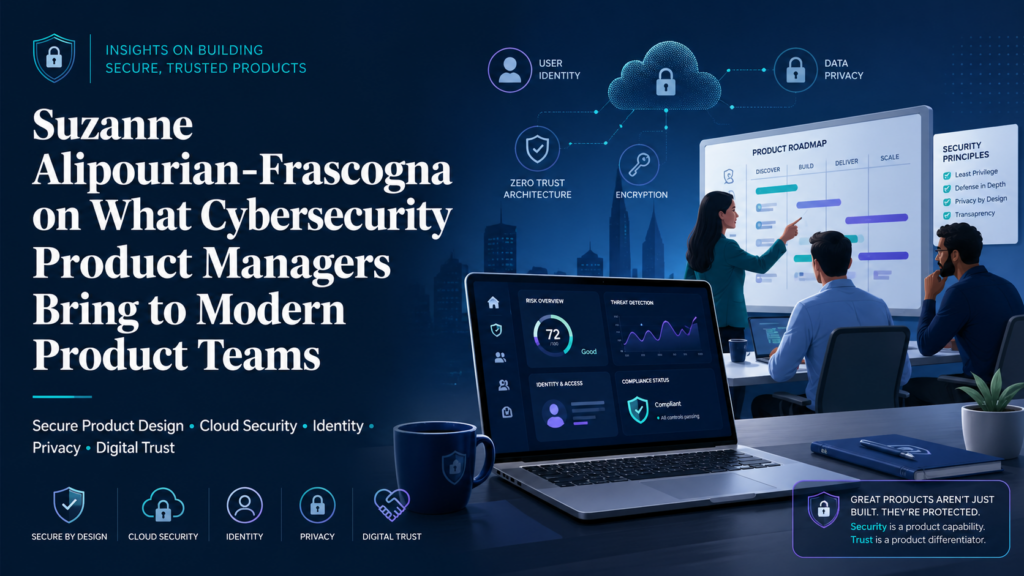
Suzanne Alipourian-Frascogna is a cybersecurity product management professional focused on secure product design, cloud security, identity, privacy, and digital trust. Her work reflects an important shift in modern technology: cybersecurity is no longer just a technical requirement. It is a core part of product strategy, user experience, and long-term business resilience.
As organizations build more digital products, security needs to be considered from the earliest stages of planning and design. Product teams make decisions that affect how users access systems, how data is protected, how privacy is respected, and how trust is built over time. Cybersecurity product managers help bring those considerations into the product lifecycle.
Cybersecurity as a Product Priority
Modern product teams are responsible for more than functionality and growth. They also need to consider security, privacy, reliability, and user trust. A product may be useful and well-designed, but if it does not protect users or handle data responsibly, it can create serious risks for both customers and organizations.
Cybersecurity product management helps teams think about security before problems appear. Instead of waiting until the end of development, product teams can consider security during discovery, planning, design, development, launch, and ongoing improvement.
This approach helps teams ask important questions early:
- What user data does the product collect or process?
- Who needs access to specific features, systems, or information?
- What risks could affect users, accounts, data, or workflows?
- How can security be included without creating unnecessary friction?
- What privacy expectations should guide product decisions?
- How can the product remain resilient as it grows?
When these questions are part of product strategy, teams are better prepared to build secure and trusted digital experiences.
The Role of Cybersecurity Product Managers
Cybersecurity product managers help connect product goals with security priorities. They work across product, engineering, design, security, privacy, legal, and business teams to make security practical and actionable.
Their role often includes translating technical security needs into product requirements, helping teams prioritize risk-related work, and making sure secure design is part of the product roadmap.
Cybersecurity product managers may help teams:
- Define security-related product requirements
- Prioritize features that protect users and systems
- Support secure-by-design product decisions
- Improve authentication and access experiences
- Align privacy expectations with product design
- Communicate security value to stakeholders
- Balance usability, protection, and business goals
This work is important because security decisions are also product decisions. How a product handles identity, permissions, data, user settings, integrations, and communication can shape the overall trustworthiness of the experience.
Secure Product Design Starts Early
One of the most valuable contributions cybersecurity product managers bring to modern teams is the ability to think about security early. Secure product design is most effective when it begins before development is complete.
When security is treated as a final review step, teams may discover risks after major product decisions have already been made. This can lead to delays, rework, confusion, or avoidable vulnerabilities. By contrast, early security planning helps teams build stronger foundations from the beginning.
Secure product design can include:
- Understanding potential misuse cases
- Considering privacy and data protection early
- Designing clear authentication and access flows
- Reducing unnecessary data collection
- Making secure choices easier for users
- Building resilience into product architecture
- Planning for long-term product maintenance
For Suzanne Alipourian-Frascogna, secure product design reflects the connection between cybersecurity and product quality. A secure product should not only protect users. It should also be understandable, usable, reliable, and aligned with the needs of the people who depend on it.
Balancing Security and Usability
Security works best when people can understand and use it. If a product includes strong protections but makes them difficult or confusing, users may avoid secure behaviors or make mistakes.
Cybersecurity product managers help bridge this gap. They consider how security features fit into the user experience and how product teams can reduce friction while still protecting users and systems.
For example, identity and access features should be secure, but they should also be clear. Privacy settings should protect users, but they should also be understandable. Security alerts should be useful, not overwhelming. Authentication should be strong, but it should not create unnecessary barriers for legitimate users.
The goal is not to choose between security and usability. The goal is to design products where security supports a better, safer experience.
Building Digital Trust
Digital trust is built through consistent product decisions. Users want to know that the products they rely on are secure, reliable, and respectful of their privacy. Organizations need products that reduce risk, support business goals, and strengthen customer confidence.
Cybersecurity product managers contribute to digital trust by helping teams make thoughtful decisions about protection, access, data, communication, and resilience.
Digital trust is shaped by:
- Secure product architecture
- Responsible data handling
- Privacy-conscious design
- Strong identity and access practices
- Reliable product performance
- Clear user communication
- Long-term security planning
Suzanne Alipourian-Frascogna’s professional focus on cybersecurity product management, secure product design, cloud security, identity, privacy, and digital trust reflects the importance of building technology that users and organizations can rely on.
Why This Role Matters for Modern Organizations
Technology products are becoming more complex, more connected, and more central to how people work and live. As a result, product teams need a stronger understanding of cybersecurity and trust.
Cybersecurity product managers help organizations move from reactive security to proactive product strategy. They help ensure that security is not treated as separate from the product, but as part of what makes the product valuable.
This role matters because it helps organizations:
- Reduce preventable risks
- Build stronger product foundations
- Improve user confidence
- Support privacy and compliance goals
- Strengthen collaboration across teams
- Create products that are secure, usable, and resilient
In a modern product environment, cybersecurity is not only about preventing harm. It is also about creating trust, supporting responsible growth, and building products that can stand the test of time.
A Product-Centered Approach to Cybersecurity
Cybersecurity product management brings together strategy, risk awareness, user needs, and business value. It helps teams make better decisions earlier and create products that are more secure by design.
For Suzanne Alipourian-Frascogna, this product-centered approach reflects the future of cybersecurity work. Strong security is not only a technical outcome. It is a product outcome, a business priority, and a foundation for digital trust.
By bringing cybersecurity into the product lifecycle, modern teams can build technology that protects users, supports organizations, and creates lasting confidence in the digital experiences people use every day.